


Ultra Series overview
Explore the Fluke Ultra Series
An introduction to the Ti300U, Ti401U and Ti480U handheld thermal imagers.
Fluke Australia video
The Fluke TiX501 and TiX580 combine 640 × 480 native infrared resolution with a large 5.7-inch touchscreen and 240° articulating design, helping thermographers inspect elevated, low-level and obstructed equipment from a safer, more practical working position.
Choose the TiX501 for high-resolution industrial inspections up to 650°C, including long-distance work with optional 2× and 4× telephoto lenses. Choose the TiX580 when you need finer 50 mK thermal sensitivity, measurement up to 1,000°C, SuperResolution, MultiSharp™ Focus, radiometric video or specialist wide-angle and macro imaging.
Compare resolution, sensitivity, temperature range, focusing technology, lens compatibility and application suitability to select the right Fluke Expert Series camera for your work.
Tick Add to compare under each product | Open Compare in the bottom-right corner | Check your selection, and press Compare | On the comparison table, select Highlight differences to quickly see where specifications differ
The Fluke TiX501 and TiX580 share the same 640 × 480 infrared resolution, 34° × 24° standard field of view and 0.93 mrad spatial resolution. Both provide LaserSharp® autofocus, advanced manual focus, radiometric image and video capture, IR-Fusion®, interchangeable Smart Lenses and a large 5.7-inch touchscreen with 240° articulation.
The TiX501 is the practical choice when you need dependable 640 × 480 inspection detail but do not require the TiX580’s advanced image-enhancement modes. Choose the TiX580 when subtle temperature differences, targets at multiple focal distances, processed high-resolution output or measurements above 650°C could materially affect the inspection.
| Fluke TiX501 | Fluke TiX580 | |
|---|---|---|
| Infrared resolution |
640 × 480 307,200 pixels |
640 × 480 307,200 pixels |
| SuperResolution | No | Up to 1280 × 960 pixels |
| Thermal sensitivity (NETD) | 75 mK (0.075°C) | 50 mK (0.05°C) |
| Temperature range |
−20°C to 650°C Not calibrated below −10°C |
−20°C to 1,000°C Not calibrated below −10°C |
| Standard-lens imaging |
34° × 24° field of view 0.93 mrad spatial resolution |
34° × 24° field of view 0.93 mrad spatial resolution |
| Focusing systems | LaserSharp® Auto Focus and advanced manual focus | MultiSharp™ Focus, LaserSharp® Auto Focus and advanced manual focus |
| Maximum digital zoom | 2× | 8× |
| Compatible lens options |
Standard lens Optional wide-angle Optional 2× telephoto Optional 4× telephoto Optional 25 µm macro |
Standard lens Optional wide-angle Optional 2× telephoto Optional 4× telephoto Optional 25 µm macro |
| Macro capability | Resolves target detail down to 25 µm with the optional 25 µm macro lens | Resolves target detail down to 18 µm with the optional 25 µm macro lens |
| Display and articulation |
5.7-inch touchscreen 240° articulating design |
5.7-inch touchscreen 240° articulating design |
| Radiometric video |
Yes Fully radiometric .is3 format |
Yes Fully radiometric .is3 format |
| Remote camera control | No | Yes, through Fluke Connect® SmartView software or the Fluke Connect app |
| IR-PhotoNotes™ | Up to 2 supporting visible-light images | Up to 5 supporting visible-light images |
| Best suited to | High-resolution industrial, utility and specialist inspections where 75 mK sensitivity and a 650°C upper limit meet the requirement | Low-contrast, high-temperature and advanced diagnostic work requiring finer sensitivity, enhanced focusing or image processing |
| Typical inspection work | Switchgear, substations, rotating machinery, building systems, electronics and component-level diagnostics | High-temperature processes, complex machinery, low-contrast faults, electronics, research and critical asset monitoring |
See Fluke cameras in detail
Watch official Fluke videos covering the TiX and Ultra Series, from camera operation and measurement setup to Super Resolution use of Fluke's analysis software - SmartView IR
Ultra Series overview
An introduction to the Ti300U, Ti401U and Ti480U handheld thermal imagers.
Fluke Australia video
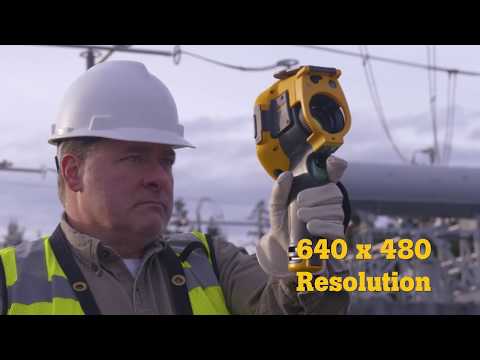
TiX and Ti480 overview
See Fluke’s overview of the TiX580 and the earlier Ti480 infrared camera.
Fluke Corporation video

Ti480U features
Explore the Ti480U in Fluke Australia’s overview of this Ultra Series model.
Fluke Australia video

Ti480U in use
Hear an HVACR technician’s perspective on using the Ti480U in the field.
Fluke Australia video

Focusing technology
Watch a demonstration of LaserSharp focusing on a compatible Fluke thermal camera.
TEquipment video

SmartView reporting
See how Fluke SmartView Research supports thermal analysis, report creation and data export.
TEquipment video

SmartView streaming
Watch how SmartView Research receives and displays live infrared camera data for analysis.
TEquipment video
Choose the Fluke TiX501 for high-resolution routine inspection
The TiX501 provides 640 × 480 native infrared resolution across a useful 34° × 24° field of view. Its 307,200 detector pixels and 0.93 mrad spatial resolution give qualified thermographers enough detail for component-level electrical, mechanical and process inspections without paying for features that may add little value to a well-defined maintenance programme.
LaserSharp autofocus uses the measured target distance to establish focus, while advanced manual focus remains available when the target, surface or inspection geometry requires direct control. The 240° rotating screen is particularly useful when inspecting overhead assets, low-level equipment or targets positioned behind guarding.
Choose the Fluke TiX501 for:
Important limitations: the TiX501 has 75 mK thermal sensitivity, a maximum measurement temperature of 650°C, 2× digital zoom and no Filter Mode, MultiSharp Focus or SuperResolution. If the work depends on resolving weak thermal contrast, maintaining focus across several target depths or producing processed 1280 × 960 images, the TiX580 is the better-specified instrument.
Choose the Fluke TiX580 for subtle thermal contrast and advanced analysis
The TiX580 retains the TiX501’s 640 × 480 native detector and 0.93 mrad standard-lens spatial resolution, but adds capabilities intended for more demanding diagnostic work.
Its specified 50 mK thermal sensitivity provides cleaner separation between areas with similar apparent temperatures. Filter Mode can reduce noise further by combining successive frames, while MultiSharp™ Focus combines images captured at different focal distances to produce a result with more of the scene in focus. SuperResolution creates a processed 1280 × 960 still image for investigations and reports that benefit from additional rendered detail.
The TiX580 also extends the upper measurement limit to 1,000°C and provides 2×, 4× and 8× digital zoom.
Choose the Fluke TiX580 for:
Important limitations: the TiX580 still uses a 640 × 480 native detector. SuperResolution is a processed still-image mode rather than native 1280 × 960 real-time imaging; the camera must be held still during capture and on-camera processing takes approximately 18 seconds. Filter Mode also combines successive frames, so it is most useful on stable scenes rather than rapidly moving targets. Its maximum measurement temperature is 1,000°C, not 1,200°C.
With their standard lenses, the TiX501 and TiX580 capture approximately the same area and place the same number of native detector pixels across a target:
A TiX580 does not inherently place more native detector pixels across a target than a TiX501 when both use the same lens from the same position. Its advantage is the additional thermal information and image-processing capability it can extract from the scene.
For small-target measurement at distance, selecting the correct optical lens is generally more important than digital zoom. Digital zoom enlarges existing pixels; a telephoto lens places more detector pixels across the target.
The TiX501 has a specified thermal sensitivity of 75 mK, while the TiX580 improves this to 50 mK. Lower is better.
The TiX580 can therefore separate finer temperature differences and produce smoother gradients where adjacent areas are at similar temperatures. This is most valuable when investigating weak heat transfer, early-stage deterioration, insulation performance or complex mechanical behaviour.
It does not automatically make the TiX580 more accurate. Both models have a stated accuracy of ±2°C or ±2%, whichever is greater, under the specified conditions. Sensitivity describes the camera’s ability to distinguish small differences; accuracy describes how closely a measurement represents the actual temperature.
For obvious hot connections and established mechanical faults, the TiX501’s 75 mK sensitivity may be entirely adequate.
Filter Mode combines information from successive frames to reduce image noise and can lower effective NETD to as little as 30 mK. Because it depends on multiple frames, it works best when the camera and target are stable.
MultiSharp Focus captures images focused at different distances and combines them so that more of the scene appears in focus. This is useful for machinery, pipework and dense installations where important targets do not occupy one focal plane.
SuperResolution uses controlled sensor movement to create a processed 1280 × 960 image. It is useful for detailed still-image analysis and reporting, but should not be described as a native 1280 × 960 detector or a real-time 1280 × 960 video mode.
The correct lens should be selected from the size of the smallest target that must be measured and the safe working distance available.
The macro lens is not a general-purpose close-focus lens: its extremely short and tightly controlled working distance suits small, stationary subjects. Optional lenses are separate purchases, and the exact lens model and current availability should be confirmed when ordering.
Fluke Expert Series FAQ
Clear answers to common questions about choosing between the Fluke TiX501 and TiX580.
Both cameras have the same 640 × 480 native infrared resolution and standard-lens spatial resolution. The TiX580 adds better thermal sensitivity, Filter Mode, MultiSharp Focus, SuperResolution, up to 8× digital zoom and a higher maximum measurement temperature of 1,000°C. The TiX501 reaches 650°C and omits those advanced enhancement modes.
Yes. Both use a 640 × 480 detector with 307,200 measurement pixels. The TiX580 can create processed 1280 × 960 SuperResolution still images, but its native detector resolution remains 640 × 480.
The TiX501 is normally the more proportionate choice when 640 × 480 detail, 75 mK sensitivity and a 650°C upper limit meet the inspection requirement. Choose the TiX580 when low thermal contrast, complex focus depth or advanced image processing could affect the diagnosis.
With the same lens, both cameras provide the same native spatial resolution. For small or distant targets, use the appropriate 2× or 4× telephoto lens. The TiX580’s SuperResolution may improve processed still-image output, but it does not replace correct optical lens selection or adequate pixels on target.
Yes. Both can save radiometric thermal video in Fluke’s .is3 format for later temperature analysis. They can also record standard non-radiometric video when post-capture temperature adjustment is not required.
Choose the TiX580 when 50 mK sensitivity, Filter Mode, MultiSharp Focus, 1280 × 960 SuperResolution or measurements between 650°C and 1,000°C have a defined value in your work. If those capabilities would not change the inspection result, the TiX501 provides the same native 640 × 480 detector detail in a simpler specification.
Tell us your application, target size and working distance. We’ll help confirm the most suitable camera and lens configuration.